Most visitors to Seattle spend their trip the way locals spend a weekend: walking from Pike Place Market down to the waterfront, riding light rail in from the airport, eating late in Capitol Hill or Ballard and heading back to the hotel without a second thought. Like any big American city, it has bright, crowded streets and quieter blocks, and a handful of simple habits covers most of what a visitor needs.
This guide sticks to practical advice, much of it drawn from the Seattle Police Department’s visitor tips and Sound Transit’s rider guidance, and it ends with the official contacts worth saving in your phone before you land.
A Realistic Picture for Visitors
Downtown Seattle is a working city center, with offices, hotels, shops, the convention district and the main transit hubs packed close together. During the day and into the evening, the core streets are busy with commuters, shoppers and tourists. You will also see people living outside and, on some blocks, behavior that feels unsettling, as in most large West Coast downtowns. Very little of it is aimed at visitors, and giving it space is usually all that is needed.
There is also plenty of help on the street. The Downtown Seattle Association’s Downtown Ambassadors work the center offering directions, cleaning and safety outreach, including around the stadium district. Waterfront Park is patrolled around the clock by Seattle Center’s Emergency Services Unit, and hotel staff are used to answering questions about walking routes.
Downtown Awareness Habits
The habits below come straight from the advice police give visitors, and none of them requires changing your plans.
Busy Corridors Versus Quiet Blocks
Stay on well-lit streets with foot traffic, especially after dark. The market, the waterfront, the Westlake shopping area and Seattle Center stay lively into the evening, while parts of the office core empty out once the workday ends and on weekends. Check your route before setting off rather than walking with eyes on a screen.
Trust your instincts. If a block feels wrong, cross the street, step into a hotel lobby or shop, or turn back toward the crowd. SPD suggests asking police officers, transit employees or business staff for directions instead of strangers. Aggressive panhandling is illegal in Seattle, you are never required to hand over money, and a polite “sorry, not today” while you keep walking is enough. You can report aggressive behavior if it continues.
Keeping Valuables Out of Sight
Pickpockets favor crowds, and SPD notes they often work in teams, with one person creating a distraction while another reaches for a bag. Keep purses closed and worn in front, carry your wallet in a front pocket, and avoid flashing cash, expensive jewelry or a phone left on the edge of a cafe table.
The same thinking applies at the hotel. Do not announce your room number in the lobby, confirm anyone who knocks unexpectedly by calling the front desk, use the room safe for passports and spare cards, and take a minute on arrival to learn where the fire exits are.
Riding Light Rail and Buses
Link light rail is one of the easiest ways to move around. The 1 Line runs from SeaTac/Airport Station through downtown to the University District and north to Lynnwood, and the 2 Line crosses Lake Washington to Bellevue and Redmond. King County Metro buses fill in the rest of the city.
A few transit habits help. Stand back from the platform edge, pick a car with other riders in it, and keep bags on your lap or between your feet rather than on an empty seat. Sound Transit asks riders to call 9-1-1 in any emergency and runs a “See something, say something” program for anything that looks wrong; its rider safety and security page explains how to reach staff. On buses, a seat near the front keeps you close to the driver.
Nights Out and Late Returns
Seattle’s nightlife spreads across several neighborhoods, from Capitol Hill and Belltown to Ballard and Fremont, plus Pioneer Square and SoDo on game and concert nights. Evenings out are part of the fun; the main risk is a tired, improvised trip home.
Getting Back to the Hotel Late
Decide how you will get back before you go out. Transit thins out late, and rideshare demand spikes when a show or game lets out. For stadium and arena nights, our event-day guide to Climate Pledge Arena and Lumen Field covers pickup plans around both venues.
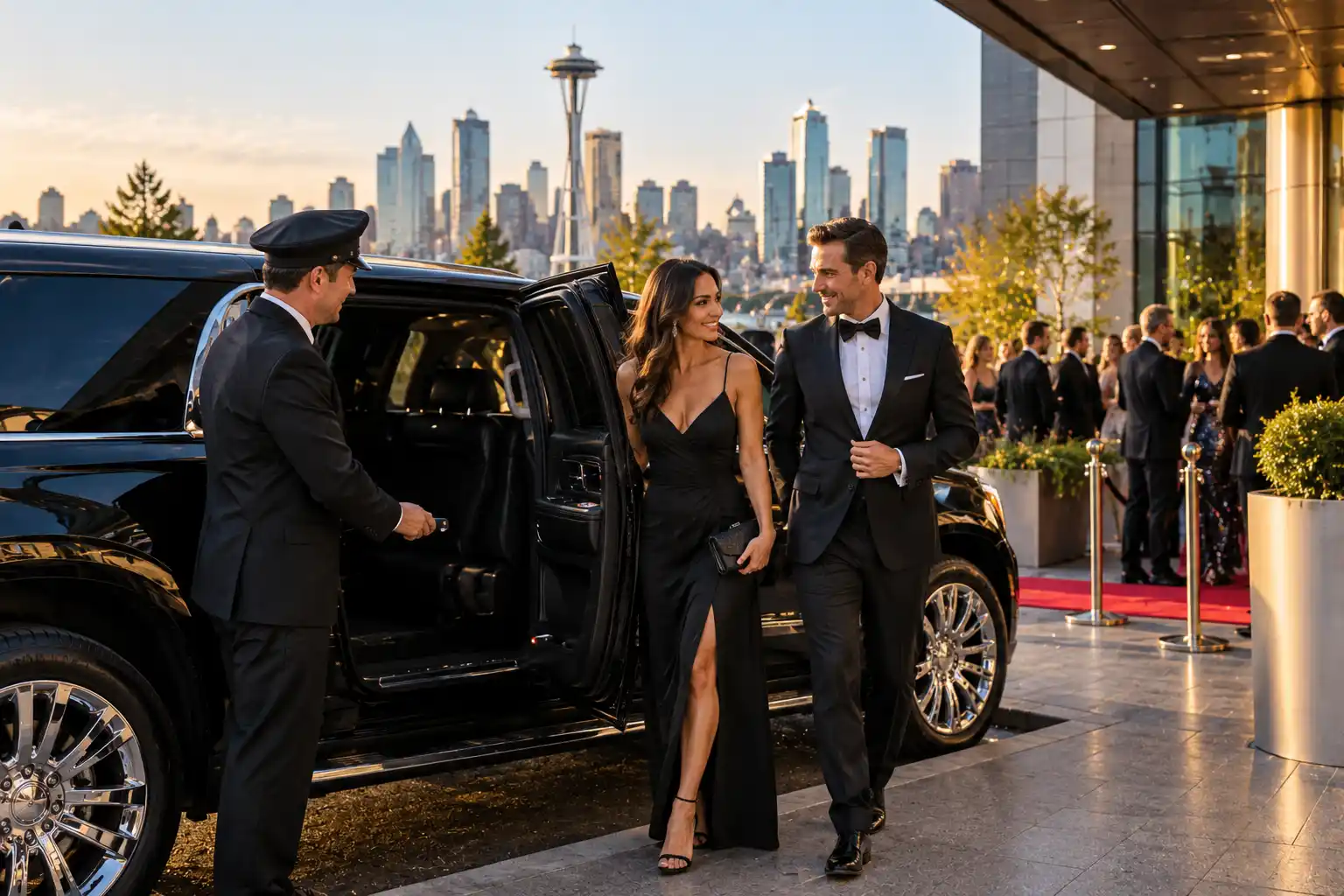
A pre-booked car takes the guesswork out of the ride. With a private car service in Seattle, the pickup time and place are set in advance, and you can wait inside the restaurant or venue until the car is at the door. Whatever you ride in, confirm the vehicle and the driver’s name before getting in.
Staying Together as a Group
SPD’s first piece of nighttime advice is to travel with others, and groups do best with a plan. Agree on a meeting point in case someone gets separated, share locations on your phones, and never let one person walk back to the hotel alone because they want to leave early. Riding home in one vehicle beats splitting into several rideshares, and a black car service for the whole party keeps everyone on the same timeline.
Car Break-Ins and Parking Smarts
Visitors with rental cars face the issue most likely to touch them: property left in vehicles. SPD’s driving advice is simple. Park in busy, well-lit areas, lock the car every time, and never leave anything visible, including charging cables, shopping bags or a jacket on the back seat. Stow valuables before you arrive at the spot, because moving them into the trunk in a parking lot shows exactly where they are.
On travel days, luggage left in a car between hotel checkout and an evening flight is an easy target, so keep bags with you. Many visitors find they need a car less than they expected, a question our post on getting around downtown without a car explores.
Where to Find Official Help
Save these before you arrive:
– Emergencies anywhere in the city or on transit: 9-1-1.
– Non-emergency concerns on Link, Sounder or ST Express: Sound Transit Security, by call or text, 206-398-5268, staffed around the clock.
– Seattle Police: the SPD visitor safety tips page, online reporting for property crimes, and a “Find your precinct” tool. The West Precinct covers downtown, and SPD’s main line is (206) 625-5011.
– On the street downtown: Downtown Ambassadors, hotel front desks and transit staff.
At the airport, the rideshare pickup sits on Level 3 of the parking garage, inside a well-lit, staffed Ground Transportation area. If you would rather skip that step on a late arrival, an airport car service from SEA can have a driver tracking your flight and ready when you land. Book your arrival ride along with your hotel, and the first and last hours of the trip are handled before you pack.
FAQ
Is it safe to walk in downtown Seattle at night?
On busy, well-lit streets near hotels, restaurants and venues, most visitors walk in the evening without trouble. The office blocks between them get very quiet after hours, so shorter walks along livelier streets are the better choice. Hotel concierges know which nearby blocks stay active late and can suggest a route.
Is the Seattle light rail safe for tourists?
Link is a mainstream way to travel, used daily by commuters, students and airport passengers alike. Treat it like any big-city train: keep belongings close, choose a car with company and stay alert in crowds after major events. Riding in from the airport with luggage is common, and bags are easiest to manage from a spot near the doors.
Which neighborhoods are best for visitors to stay in?
Downtown near Westlake, Pike Place Market and the waterfront is the most convenient base, with sights, dining and light rail within walking distance. South Lake Union suits business travelers who want calmer evenings, Lower Queen Anne works well for Seattle Center events, and Capitol Hill appeals to people who want nightlife outside the door. Whatever you choose, a hotel on a busy street close to a station makes every evening easier.
Who can you contact about a safety concern on light rail?
For an emergency, dial 9-1-1. For something worrying but not urgent, text or call Sound Transit Security and include the train direction, the car number if you can see it and the next station, so staff can find the right spot quickly. Station employees and security officers can also be approached directly.