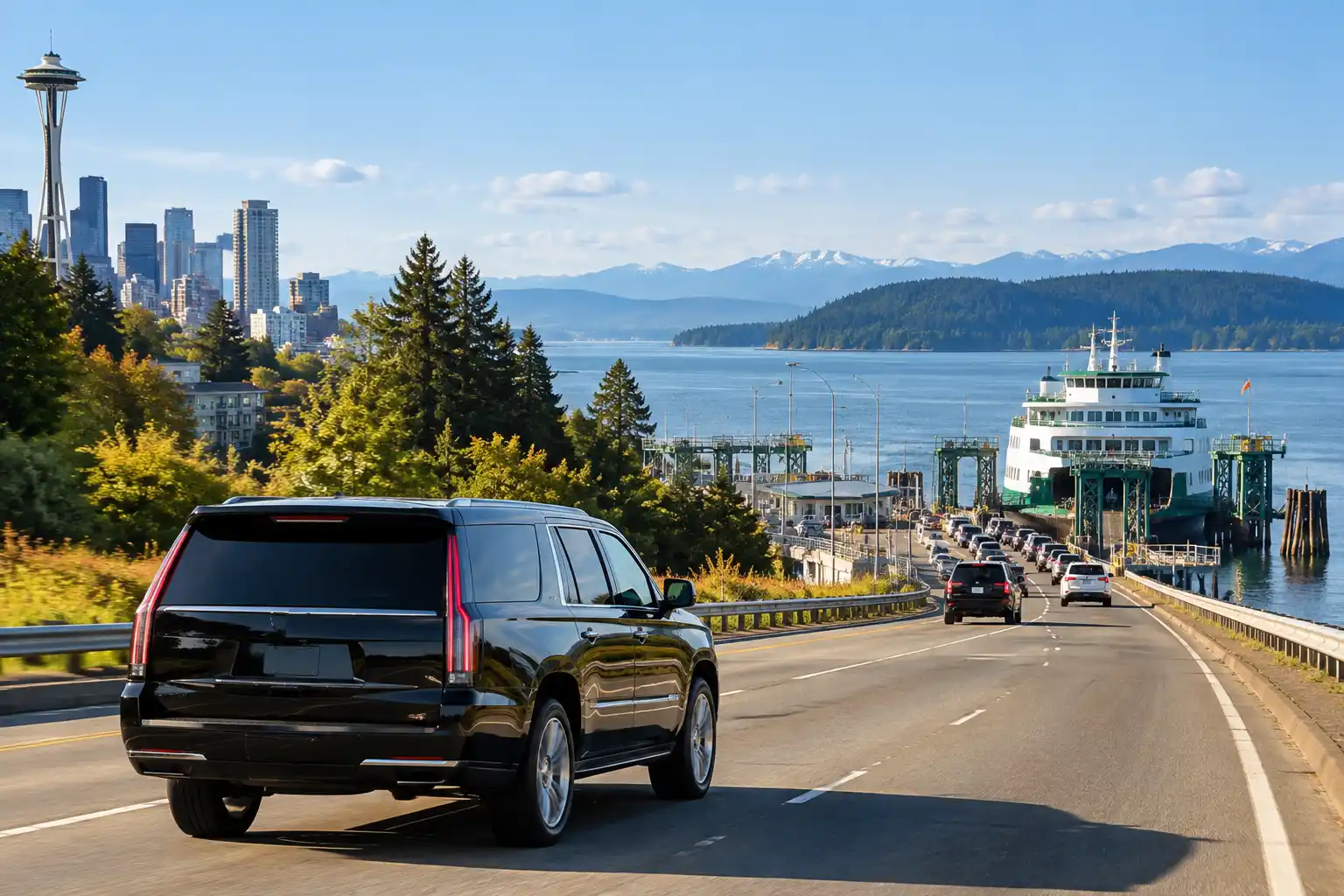
On a map, the San Juan Islands look like a short hop from downtown Seattle. In practice, the trip involves three distinct stages: getting out of the city core, covering the long northbound run on I-5 and SR-20, and arriving at a ferry that leaves on time whether you are aboard or not.
Travelers starting downtown usually come from one of three places: a hotel, a cruise pier on the waterfront or the train station in Pioneer Square. Each one has its own pickup quirks, and each benefits from a departure time chosen with the city’s traffic patterns in mind. This guide follows the trip from the curb to the dock.
Leaving the City Core
The first few miles are often the slowest per mile of the whole journey. Downtown’s one-way grid, bus lanes and short loading zones mean the pickup itself takes some care, and the climb onto northbound I-5 can back up well before the freeway does.
A chauffeur who knows the area chooses the on-ramp based on where you are starting and what the traffic is doing. From the waterfront, the SR-99 tunnel is sometimes the cleaner way to slip north past the core before joining I-5. When the reversible express lanes on I-5 are open in the northbound direction, they can also take some of the sting out of the first stretch. These are small decisions, but together they set the tone for the rest of the trip.
The Route North to Fidalgo Island
Once clear of the city, the drive is simple to describe. I-5 carries you north past Lynnwood, Everett and Marysville, across the Skagit River near Mount Vernon and on to Burlington. There, you leave the freeway for SR-20 heading west across the flat Skagit farmland.
SR-20 crosses the Swinomish Channel onto Fidalgo Island, passes the refineries at March Point and continues into Anacortes. The ferry terminal sits a few miles beyond downtown Anacortes on the island’s west side, so the last part of the drive winds through town and out toward the water.
In light traffic, the whole run from downtown Seattle to the terminal usually takes roughly an hour and a half to two hours. Heavy traffic, weather or a holiday weekend can stretch that considerably. Seattle Town Car covers this route regularly through its Seattle to Anacortes chauffeur service.
Departure Windows That Dodge Downtown Congestion
Picking the right time to leave matters as much as picking the right route. A few patterns are reliable enough to plan around:
– Weekday afternoons are the hardest window, with northbound I-5 slowing from downtown through Snohomish County.
– Mid-morning and midday departures generally move more smoothly once the morning rush has eased.
– Friday afternoons in the warmer months add island-bound and weekend traffic on top of the commute.
– Early-morning departures avoid most congestion but call for an earlier start at the hotel.
The sailing you choose should drive the departure time, not the other way around. Check the sailing times and walk-on guidance on the Washington State Ferries site before booking the car, then work backward with a comfortable margin. If the only sailing that fits would put you on I-5 at the peak of the afternoon commute, consider an earlier boat or a later one rather than squeezing through rush hour.
From a Cruise Ship Straight to the Islands
Plenty of travelers end an Alaska cruise in Seattle and want to continue straight to the San Juans. It is a natural pairing, since both trips revolve around water and scenery, and the islands are a relaxing way to wind down after a busy week at sea.
Cruise ships dock at Pier 66 on the central waterfront or at Pier 91 at Smith Cove, north of downtown. Disembarkation happens in the morning, and the timing of your departure from the ship depends on your group and luggage arrangements. A private car waiting in the pier’s ground transportation area lets you load everything at once and head north without a stop at a hotel. Pier 91’s position north of the core gives you a slight head start compared with the central waterfront.
The key is to pair the ship with an afternoon sailing rather than a midday one, so there is room for a slow disembarkation. If you are traveling with a lot of luggage after a long cruise, an SUV or van keeps everything together. More detail on pier pickups is on the cruise transportation page.
Pickups at Hotels and the Train Station
Downtown hotels range from properties with a covered motor court to those with only a curbside loading zone. Let the dispatcher know which entrance you will use, and keep your bags ready in the lobby so loading is quick.
King Street Station, the city’s Amtrak hub, is another common starting point, especially for travelers coming up from Portland by rail and continuing to the islands. The chauffeur can meet you at the station and help with luggage before heading north. The station sits near the stadiums, so on game days, plan for slower streets around Pioneer Square.
If you are arriving by air rather than starting in the city, the timing works differently; the airport-to-ferry version of this trip has its own guide.
When you have your sailing in mind, book the ride to Anacortes and include the sailing time in your notes so the pickup can be set to match.
FAQ
How many hours should we allow from a downtown hotel to the dock?
Plan on roughly two hours on the road at quieter times and closer to three when afternoon traffic builds. Then add the arrival margin the ferry system recommends for walk-on passengers. Extra slack is far cheaper than watching the boat pull away.
Can I go from a cruise ship to the Anacortes ferry the same day?
Usually, yes, provided the sailing leaves enough room after you walk off the ship. A morning disembarkation paired with an afternoon boat is a comfortable plan. If you expect to be among the last passengers off, choose a later sailing.
Is there a stop worth making on the way?
The Skagit Valley farmland around Mount Vernon and Burlington is pleasant to see, and the small waterfront town of La Conner is a short detour from SR-20. Many travelers also stop for groceries before reaching the islands. Mention any stops when you book so the timing allows for them.
Should I book the return ride at the same time?
If your return sailing is known, yes. Having the car set up means the chauffeur is waiting when you walk off the ferry, and details can still be adjusted later. Southbound traffic toward Seattle tends to be heavy at the end of weekends, so book early for those days.