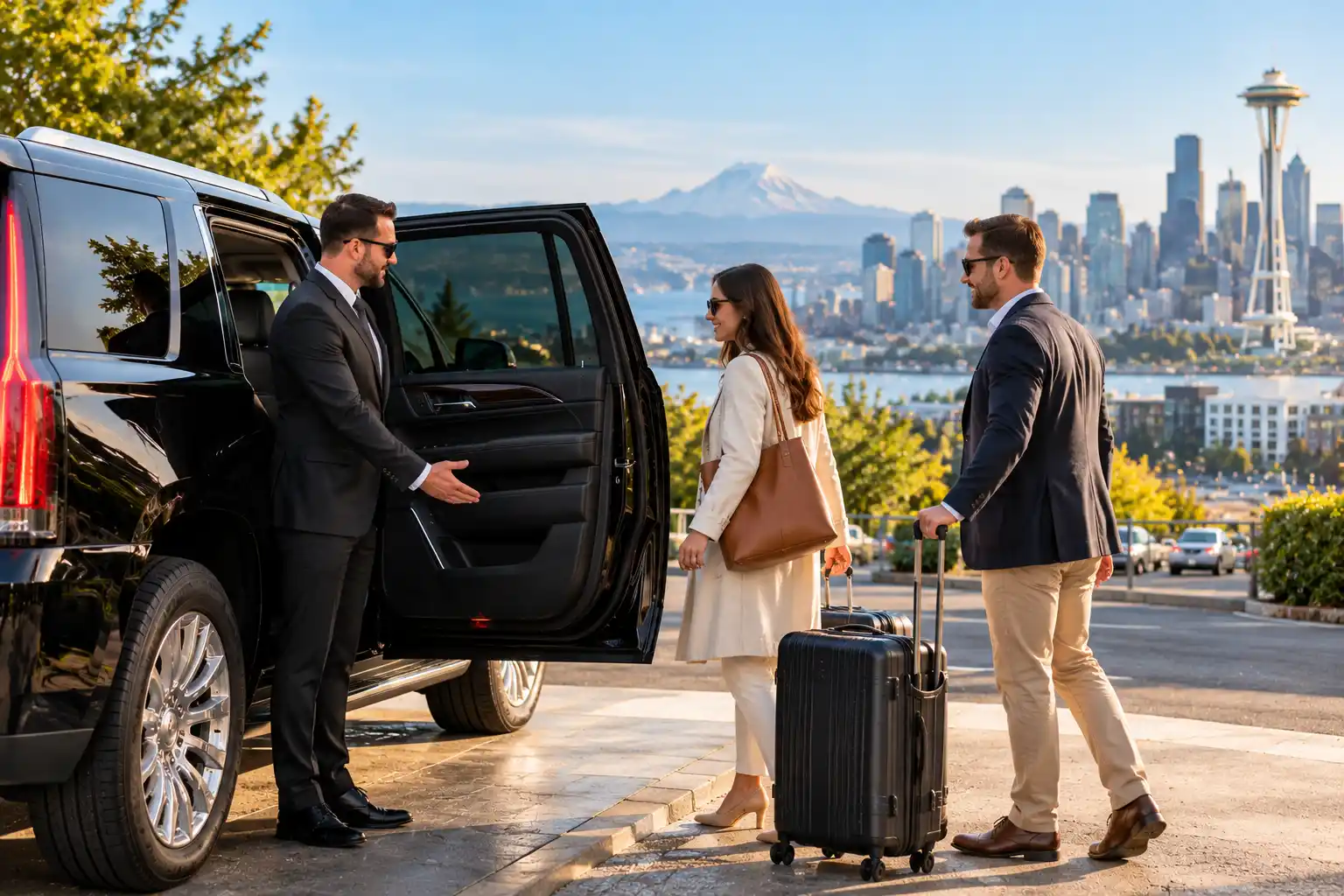

Ask a limo company for a price per person and you will usually hear a polite pause on the line. That is not evasion. The company does not sell seats; it sells the use of a vehicle and a chauffeur for a trip or a block of time. The per-person figure is math that the group does among themselves.
That math is worth doing carefully, because small choices change everyone’s share more than people expect. This article stays with the per-head view: how group size, vehicle fit, hours and the way you split the bill shape what each person pays. For the published figures themselves, the rates page is the single source.
Limos Are Priced per Vehicle, Not per Seat
When you book a stretch limousine, a Sprinter or an SUV, the operator’s cost is the same whether three people climb in or the vehicle is full. The chauffeur’s time, the fuel, the preparation and the vehicle’s availability for other jobs do not change with headcount.
So the total is set by the vehicle class and the length or route of the booking, and the per-person share is simply that total divided by the people riding. Everything that follows comes back to that one division.
How Group Size Changes Each Share
Because the total stays fixed for a given vehicle, each extra rider lowers everyone’s share. A group of eight in a vehicle that seats ten splits the cost eight ways. Invite two more friends and the same total is now split ten ways, so each person pays noticeably less.
The pattern holds until the vehicle is full. Add an eleventh person to a ten-seat vehicle and you need the next size up, which carries a higher total. At that point, the share per person can jump rather than fall, sometimes landing above where it was with eight riders. Knowing the capacity breakpoints of each vehicle class is the most useful piece of information an organizer can have.
The Cost of an Empty Seat
The flip side is that every empty seat is paid for by the people who did show up. Booking a coach-layout van for a group that could fit in an executive layout, or a large stretch for a party of five, quietly raises each person’s share.
Match the vehicle to the realistic headcount rather than the hopeful one. Seattle Town Car’s Sprinters, for instance, carry as many as ten riders when fitted as an executive cabin and as many as fourteen in coach form, depending on configuration, so a group of nine and a group of thirteen fit different vans. The Sprinter van service page shows the layouts. If attendance is uncertain, confirm numbers before choosing the vehicle rather than after.
Hours Versus Headcount
On hourly bookings, time often moves the per-person figure more than headcount does. Trimming an hour off an evening by tightening the route can save each rider more than adding another friend would. Many limousines also come with a booking minimum, explained in this piece on why limo companies set minimum hours, so a very short plan may not reduce the total much.
For a group heading to a single destination and back, such as a show downtown, booking two point-to-point legs can work out better than holding the vehicle all evening. Our walkthrough of fixed-fare limo pricing in Seattle shows when that structure makes sense.
Splitting the Bill Without Friction
Money is where group plans most often fray, so settle the method before anyone books. A few habits help:
– Agree on who books and pays the company, so there is one clear contact.
– Collect shares before the booking is finalized rather than after the night.
– Decide upfront whether the gratuity is included in each share.
– Set a rule for extra time: if the group stays out longer, the added cost is split the same way.
– Keep a simple shared note listing who has paid and how much is still owed.
Gratuity often catches groups off guard, because it may be added at booking or handed over at the end of the night. This guide on how much to tip a chauffeur helps the organizer set a figure everyone can plan for.
When Two Smaller Vehicles Beat One Large One
Bigger is not automatically cheaper per head. There are several cases where two smaller vehicles are the better plan.
The first is a group sitting just over a capacity breakpoint. Seven or eight people are too many for one SUV yet would leave a large van half empty, so two SUVs can be the better fit, and depending on the date and hours, the combined total can compare well. The second is a group that will split up at the end of the night, with half heading north to Lynnwood and half going to the Eastside. Two vehicles avoid a long final loop that adds hours to the bill. The third is a mixed group, such as parents and teenagers after a graduation, who may prefer separate cars anyway.
For smaller parties, a luxury SUV seats four to six passengers with room for luggage, which makes it a flexible building block for these splits.
Once you have a headcount and a rough timeline, send both through the quote request form and ask for the options side by side.
FAQ
Is it cheaper per person to fill a larger limo?
Only when the extra seats are actually filled. A larger vehicle carries a higher total, so each share falls only if the added space is used. A half-empty large vehicle usually costs each rider more than a full smaller one.
Should gratuity be split along with the fare?
Yes, the simplest fair approach is to fold it into the same equal share. Agree on the tip method before anyone sends money, whether it goes on the card with the fare or travels in an envelope to the final stop, so one person does not end up quietly paying it for everyone.
How do we handle a guest who cancels late?
The vehicle total does not shrink when someone drops out, so the group should agree in advance on a cutoff after which a share is committed. Aligning that cutoff with the company’s cancellation window keeps things fair for everyone, including the organizer.
Can each guest pay separately?
Bookings are usually paid through one organizer, who then collects from the group. If separate payments matter to you, ask about it when booking, since options depend on the company’s payment setup.