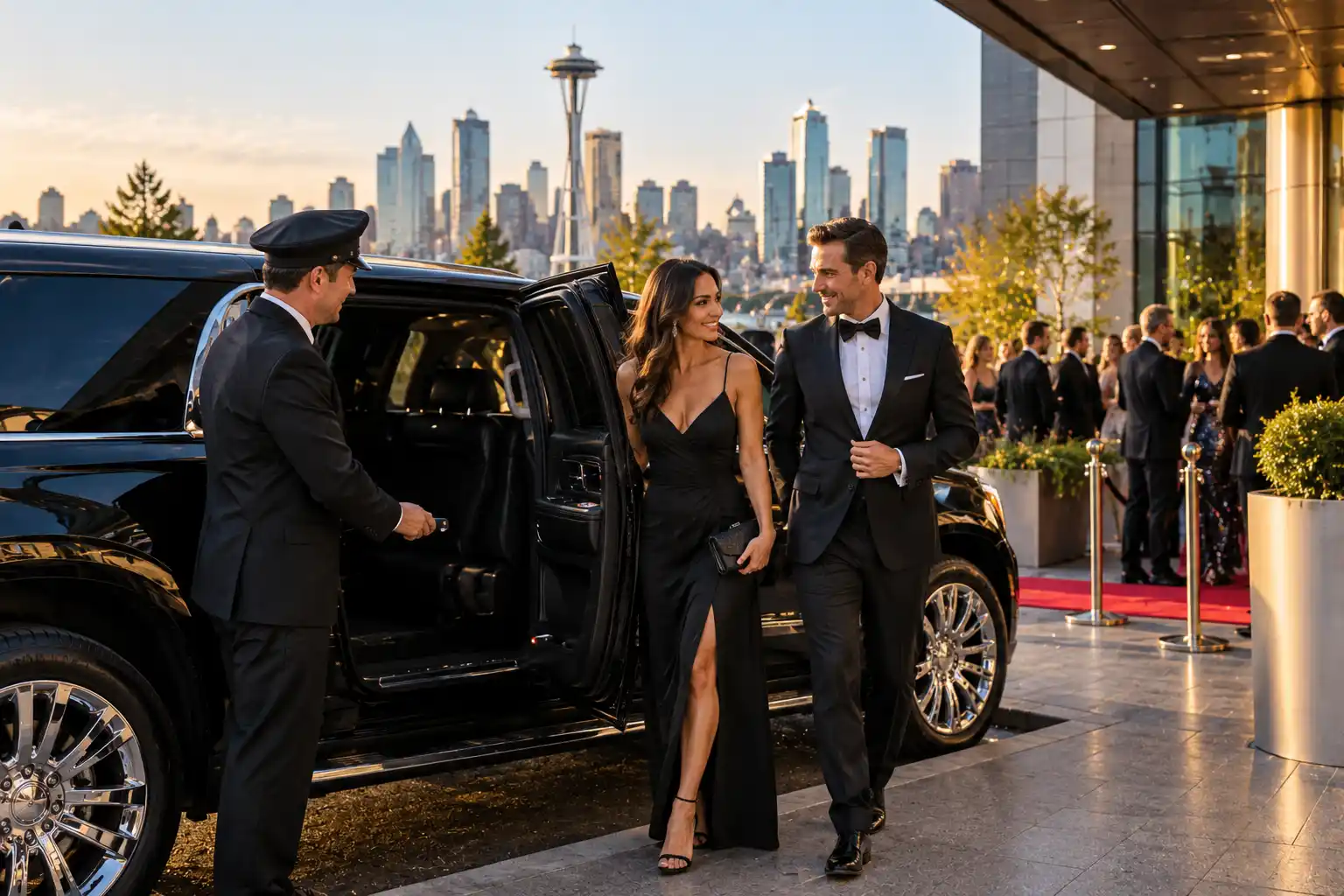

Getting to a big event is rarely the hard part. Leaving is. When a sold-out crowd pours out of a stadium or arena at the same moment, the streets around it fill with pedestrians, police direct traffic, rideshare pickups stack up block after block, and phone signals strain under the load. People who planned only the first half of the night spend the second half on a curb, refreshing an app.
Seattle’s major venues are clustered in two areas: the stadium district in SoDo and the Seattle Center campus north of downtown. Each has its own traffic pattern and its own best practices for drop-off and pickup. This guide covers both, explains how a chauffeur handles the exit crush, and helps you decide between a flat-rate drop-off and an hourly booking where the car stays with you.
Why Event Nights Need a Transport Plan
Parking near the venues is limited and often expensive, and driving yourself means someone in the group stays sober and fights the garage exit afterward. Rideshare works well on quiet nights but struggles when thousands of riders request cars within the same few blocks. Groups split up, pickup pins land on the wrong side of a closed street, and the wait stretches on.
A transport plan answers three questions before you leave home. Where exactly will the car drop you? Where will everyone meet afterward? How will the ride home be handled if the event runs long? Settle those, and the evening becomes about the game or the show rather than the logistics. For groups, a single reserved vehicle also keeps everyone together, which matters when the night includes a dinner before or a stop after.
Stadium Days in SoDo
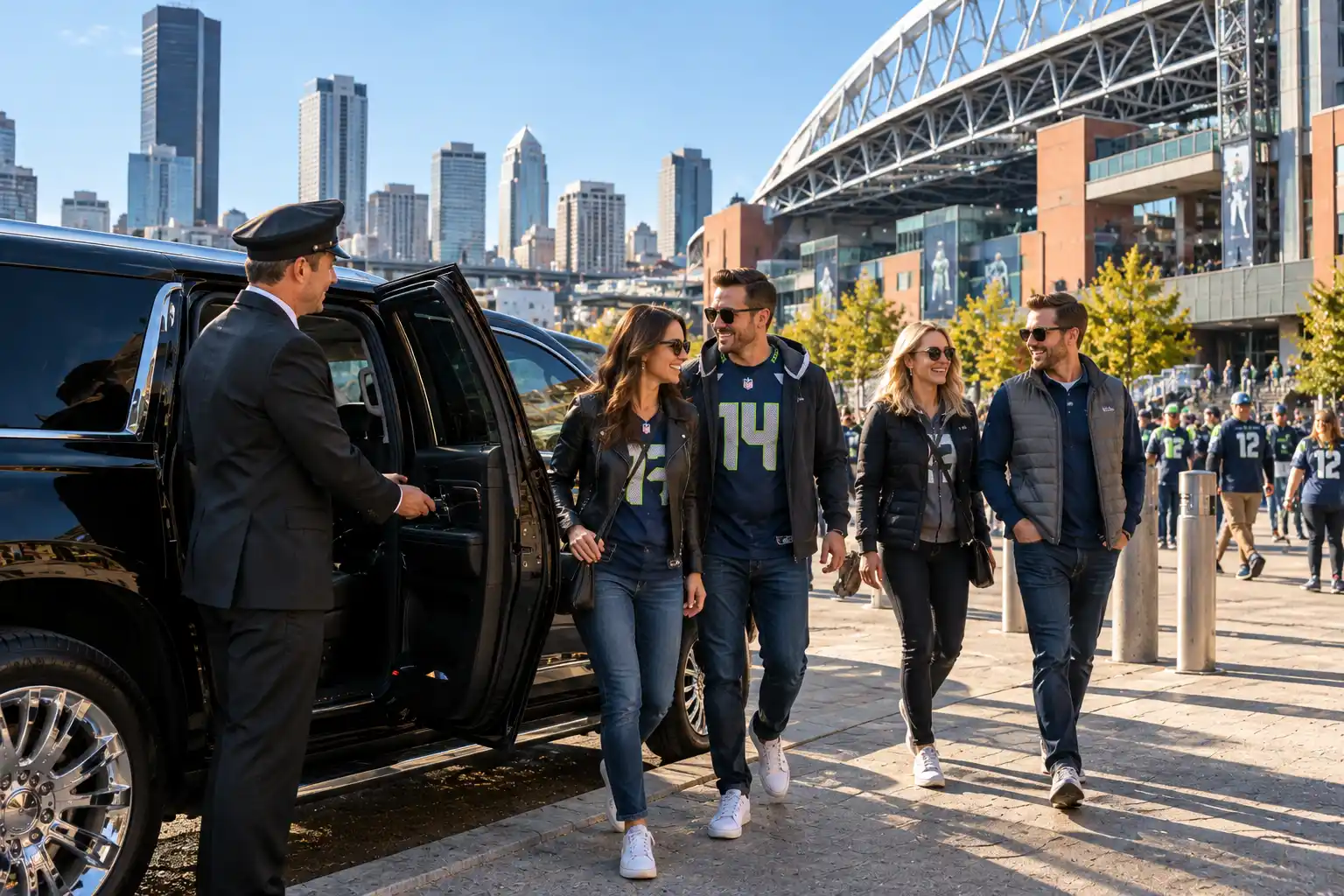
Lumen Field and T-Mobile Park sit side by side just south of Pioneer Square, wedged between I-5, I-90 and SR-99. That location is convenient on paper, since three highways feed the area, but on game days the surrounding streets come under traffic control, some blocks close to vehicles, and the ramps nearby back up well before kickoff or first pitch.
An experienced chauffeur will not try to deliver you to the main gate. Instead, the drop-off happens a few blocks out, on a street that stays open and lets the car pull in safely, with a short walk to the entrance. Pioneer Square to the north and the industrial streets to the south both offer options, and the right choice depends on which gate you are using and which direction the car will leave.
The busiest days are the ones when both stadiums host events, or when a game coincides with other downtown crowds. On those dates, allow extra time in both directions and keep the plan simple. If your group is celebrating, this look at game day with the whole crew shows how a stadium outing fits into a fuller evening.
Arena and Seattle Center Events
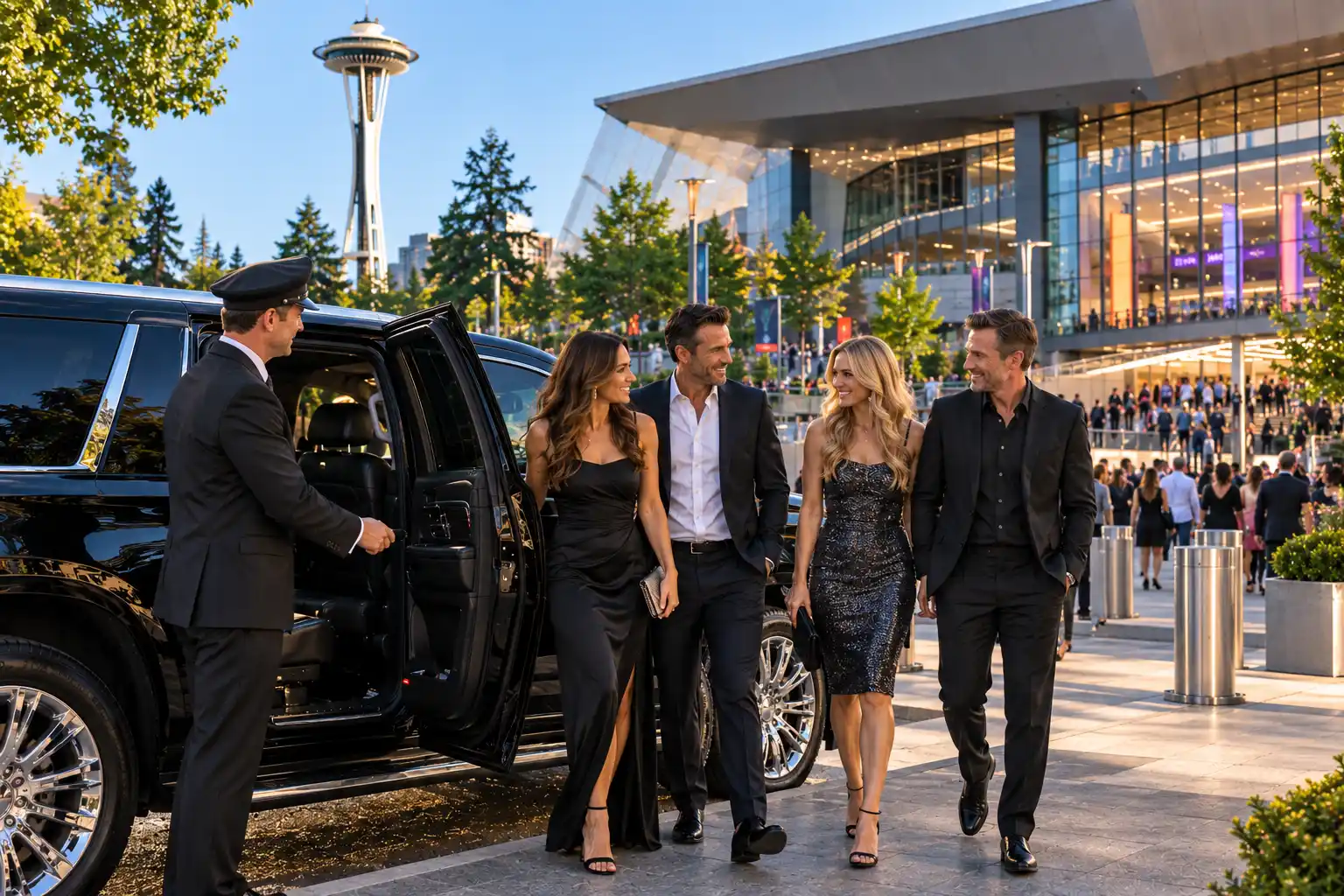
Climate Pledge Arena sits on the Seattle Center grounds, near the Space Needle and the Lower Queen Anne neighborhood. Concerts, hockey games and festivals on the campus bring crowds onto Mercer Street, First Avenue North and Queen Anne Avenue North, all of which slow down sharply around start and end times.
Concerts carry a particular challenge: they tend to end late and all at once. There is no gradual exit like the late innings of a ballgame, where some fans leave early. When the encore finishes, the whole building heads out together. Festivals on the Seattle Center grounds are different again, spreading people across a large campus with several exits, so a meeting point must be specific.
For arena events, pick a meeting spot that is easy to find on foot and easy for a car to reach: a named street corner a short walk from the crowd, not “out front.” Your chauffeur can suggest one based on how traffic is being routed that night. A luxury SUV is often the most practical choice here, since it handles tight curbs and quick stops better than a long vehicle.
The Post-Event Pickup Problem
The ride home is where most event plans fall apart, and the fixes are simple once you know them:
– Agree on the meeting point before you go in, and make sure everyone in the group knows it.
– Walk a few blocks away from the main exit flow, toward the meeting spot, rather than waiting at the gate.
– Text the chauffeur when you start walking, not when you arrive, so the car can move into position.
– Expect phone service to be patchy right after the event, and rely on the plan you set earlier.
– Decide in advance whether you will leave a little early or wait out the first rush inside.
Your chauffeur, meanwhile, is staged nearby, watching the traffic pattern and ready to move once you are close. That combination of a fixed meeting spot and a car already waiting is what lets a chauffeured group leave while others are still searching for their rides.
Flat-Rate Drop-Off or Hourly Wait-and-Return
Two booking styles fit events, and the choice depends on what you need from the car.
A flat-rate drop-off covers a one-way ride to the venue at a fixed fare agreed in advance. It suits guests who are staying downtown afterward, heading to a hotel nearby, or getting a ride home another way. You can also book a separate return at a set time, though that carries a risk: overtime, extra innings and long encores do not follow the clock. For more on how fixed fares work, see this explainer on flat-rate limo pricing.
An hourly booking keeps the vehicle and chauffeur with you for the whole evening, including dinner before, the event itself and any stops after. The car waits nearby while you are inside, and the return happens whenever you walk out. This option makes the most sense for groups, for celebrations with several stops, and for anyone who wants a guaranteed ride home no matter how late it ends. The site’s hourly car service rates page explains how time-based bookings are structured, and if the group is splitting the cost, this guide to dividing a limo fare per person can help.
When you know the date, the venue and the size of your group, reserve your event ride and note whether you need a drop-off only or the car for the full night.
FAQ
Where will the driver meet us after a game?
At a spot agreed before you enter the stadium, usually a few blocks from the main gates on a street where the car can legally stop. If police routing changes during the game, the chauffeur will text you an updated location. Save that message somewhere you can find it without scrolling.
Can the vehicle wait during the whole event?
Yes, when the ride is booked by the hour. The chauffeur remains in the area, though not always at the curb, since stopping rules around venues are strict. When you are ready to leave, a quick message brings the car to the meeting point.
Is an SUV or limo better for a concert group?
For up to about six people, an SUV is usually the easier choice, since it moves through congested drop-off streets with less trouble. Larger groups who want the full celebration feel may prefer a stretch limo or a Sprinter van. Your headcount and your plans before and after the show decide it.
How early should we be dropped off?
Earlier than you think. Security screening, bag checks and crowds at the gates all add time, and roads near the venue fill up well before the start. Check the venue’s own arrival guidance and plan to be at the doors with time to spare.