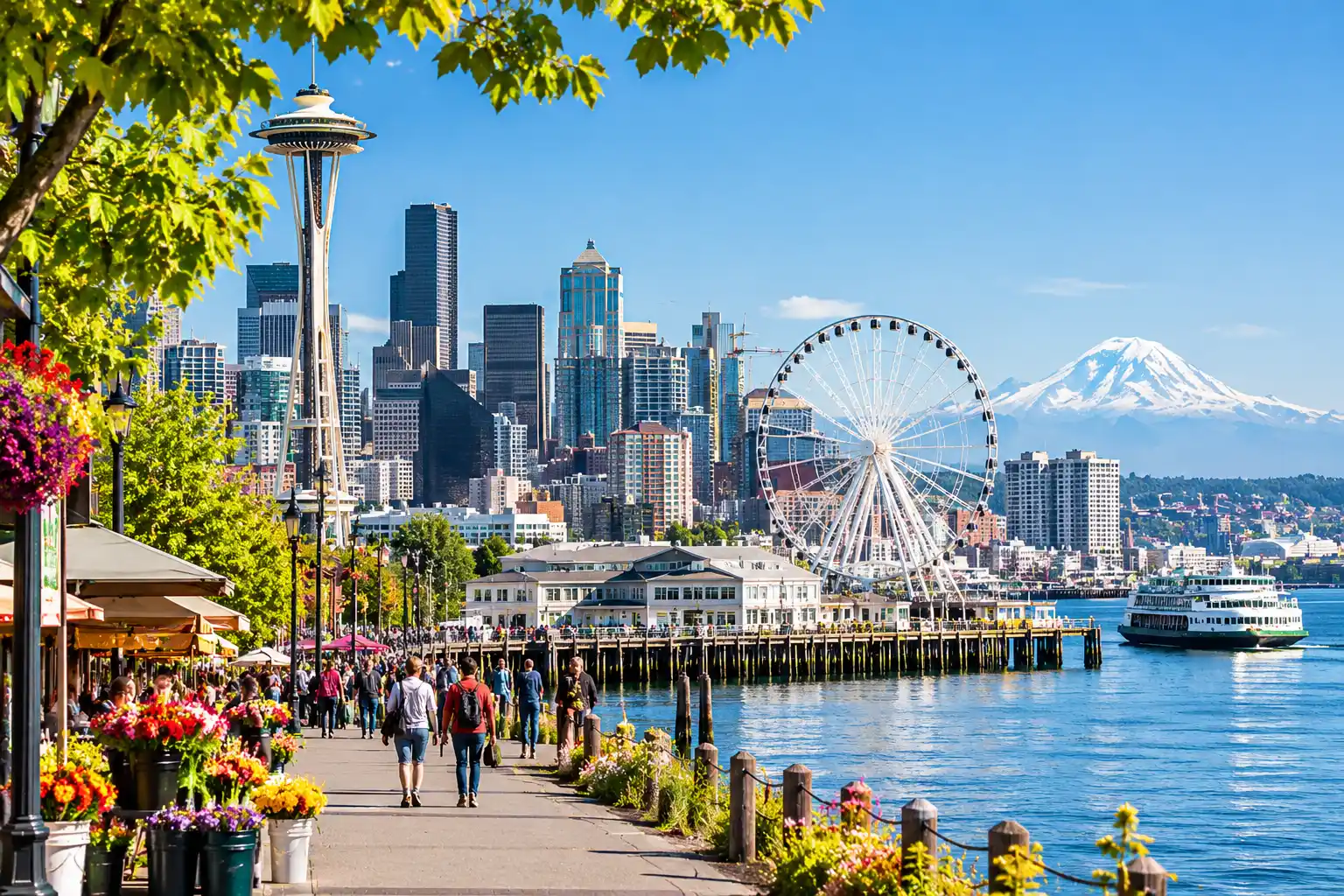
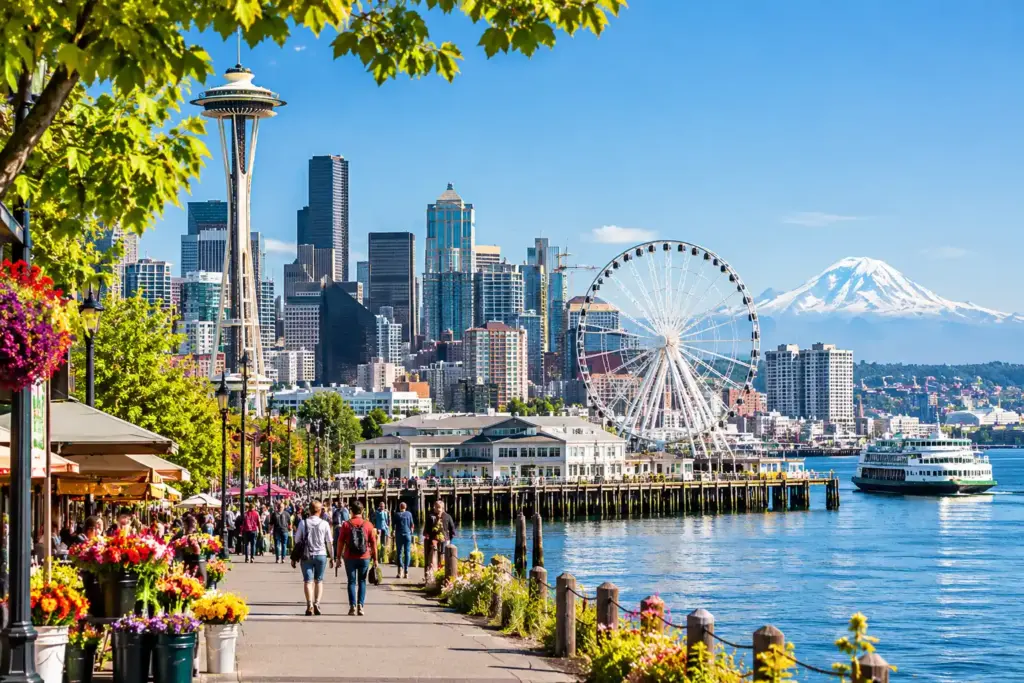
Seattle rewards people who look past the skyline. Beyond the famous sights, the city hides a Japanese garden in a residential neighborhood, a waterfall behind brick walls in Pioneer Square, and old-growth forest a short drive from downtown. Water is never far away, whether it is Elliott Bay, Lake Union or Lake Washington.
This list keeps to 25 picks inside city limits, sorted into three groups: eight free classics, eight lesser-known places locals return to, and nine paid attractions that earn their ticket. Each entry covers what the place is, why it deserves a slot, and one practical tip. Treat the numbers as a menu rather than a ranking; the final section shows how to group picks by neighborhood.
Free Classics Every First-Timer Should See
These eight cost nothing to enter and give you the shape of the city: its market, its hills, its lakes and its working waterfront.
1. Pike Place Market and the Waterfront Below It
Pike Place Market sits on the bluff above Elliott Bay, a multilevel maze of produce stalls, fish counters, flower sellers and craft tables that has fed the city for generations. Overlook Walk links the market directly to Waterfront Park, so you can wander from the main arcade down to the piers on foot. Arrive early on a weekday to watch vendors set up; by midday on summer weekends the arcade moves at a shuffle.
2. Kerry Park at Golden Hour
This small park on the south slope of Queen Anne Hill delivers the view on half the postcards in town: the Space Needle in front of the downtown towers, Elliott Bay to the right and, when the sky is clear, Mount Rainier behind it all. Late-afternoon light turns the glass towers gold. Arrive a little before sunset, because curb space on the surrounding residential streets fills quickly.
3. Gas Works Park on Lake Union
On the north shore of Lake Union, the rusted towers of an old gasification plant stand preserved as industrial sculptures inside a grassy park. Climb Kite Hill for a straight-on view of downtown across the water, with floatplanes taking off in front of you. Bring a layer even on sunny days, since the wind off the lake is steady.
4. Discovery Park and the West Point Lighthouse
Discovery Park in Magnolia is the largest park in the city, a mix of meadows, forest and sandy bluffs high above Puget Sound. The Loop Trail of roughly three miles gives a good sample, and a side trail drops to the beach and the West Point Lighthouse. Save energy for the climb back up, which is steeper than the walk down suggests.
5. The Fremont Troll and Its Odd Neighbors
Under the north end of the Aurora Bridge, a giant concrete troll grips a real Volkswagen Beetle and stares out from the shadows. Fremont, which calls itself the Center of the Universe, keeps going in the same spirit with a rocket bolted to a building and the “Waiting for the Interurban” sculpture that locals dress up for birthdays. Walk downhill from the troll to the Ship Canal, where a waterside path heads west toward Ballard.
6. Washington Park Arboretum
The arboretum stretches along Union Bay between Montlake and Madison Park, with trees from around the temperate world planted along winding paths. Azalea Way is the spring showpiece, and autumn brings red maples and gold larches. The Waterfront Trail crosses wetlands to Foster Island on low boardwalks, while a separately ticketed Japanese garden sits at the south end.
7. Ballard Locks and the Fish Ladder
The Hiram M. Chittenden Locks, run by the U.S. Army Corps of Engineers, lift and lower boats between the freshwater lakes and the salt water of Puget Sound. Kayaks, yachts and fishing boats share the chamber while the water level shifts. Cross to the south side for the fish ladder, where underwater windows show salmon climbing upstream during their seasonal runs, then stroll the Carl S. English Jr. Botanical Garden on the way out.
8. Olympic Sculpture Park
The Seattle Art Museum runs this free outdoor park on a zigzagging slope from Belltown down to the water. Large-scale works sit against the Olympic Mountains, including Alexander Calder’s bright red “Eagle.” Keep walking north and the path continues into Myrtle Edwards Park for a long, flat stretch beside the bay.
Lesser-Known Corners Locals Return To
Visitors tend to skip these, which is exactly why residents like them.
9. Kubota Garden in Rainier Beach
Kubota Garden began as the life’s work of Fujitaro Kubota, a Japanese immigrant gardener, and is now a city park in southeast Seattle. Ponds, stone paths and arched red bridges wind through carefully shaped pines and maples. Go on a weekday morning for near silence, or in autumn when the maples turn.
10. Volunteer Park Water Tower Climb
The brick water tower at the edge of Volunteer Park on Capitol Hill hides a spiral staircase of about a hundred steps leading to an observation room with views in every direction. Displays inside explain the Olmsted Brothers plan that shaped Seattle’s parks. Afterward, cross the lawn to Isamu Noguchi’s “Black Sun,” whose round opening frames the Space Needle in the distance.
11. Waterfall Garden Park in Pioneer Square
At Second Avenue South and South Main Street, a walled pocket park hides a man-made waterfall spilling over granite boulders. It honors the messenger service that started on this block and grew into a global parcel company. The rush of water blocks out the city almost completely, which makes it a fine place to sit with a coffee.
12. Alki Beach and the Point Lighthouse Shoreline
Alki in West Seattle is the closest thing the city has to a beach town, with a sandy shore, a paved promenade and a sweeping skyline view across Elliott Bay. Follow the shore southwest toward Alki Point and its lighthouse, passing the small Statue of Liberty replica and the marker for the settlers who landed here. The King County Water Taxi from Pier 50 crosses to West Seattle, turning the outing into a short boat ride.
13. Seward Park’s Old-Growth Loop
Seward Park fills a forested peninsula in Lake Washington, and its interior holds some of the last old-growth forest in the city. A flat paved path of a little over two miles circles the shoreline, with Mount Rainier views on clear days. Take an inner trail for the tall firs and cedars, then finish on the waterfront loop.
14. The Center for Wooden Boats on South Lake Union
This living maritime museum keeps historic small craft at its docks in Lake Union Park, and visitors can stroll the floats to see them up close. Depending on the season, it offers sailing classes, rentals and public sails. The Museum of History and Industry sits next door, and the South Lake Union Streetcar from Westlake ends a short walk away.
15. Klondike Gold Rush National Historical Park Visitor Center
The Seattle unit of this National Park Service site occupies a historic building at Second Avenue South and Jackson Street. Its exhibits show how the rush to the Yukon turned Seattle into the outfitting hub for prospectors heading north, and how that boom shaped the neighborhood’s brick streets. Stop here first for context before exploring the rest of Pioneer Square.
16. Frye Art Museum on First Hill
The Frye states plainly that admission is always free, which makes it one of the easiest museum visits in town. Its founding collection of paintings from the turn of the twentieth century hangs alongside rotating contemporary exhibitions. It sits a short uphill walk from downtown and rarely feels crowded.
Paid Favorites Worth the Ticket
Ticket options change, so check each attraction’s own site before you go.
17. Space Needle and the Seattle Center Grounds
The Space Needle was built for a world’s fair, and its observation level still gives the widest view in the city, from the Sound to the Cascades. The surrounding grounds are free to wander, from the International Fountain to the food stalls inside the Armory. Ride the Monorail from Westlake, and if low clouds hide the mountains, save the ticket for a clearer day.
18. Chihuly Garden and Glass
At the base of the Needle, this exhibition gathers Dale Chihuly’s blown glass in darkened galleries, a tall glasshouse and an outdoor garden where glass forms grow among real plants. Some pieces fill entire rooms. Visit in late afternoon to see the garden by daylight and the glasshouse as the sky darkens.
19. Museum of Pop Culture
Frank Gehry’s crumpled, brightly colored building at Seattle Center is hard to miss, especially with the Monorail sliding through it. Rotating exhibitions cover music, film, science fiction and games, with a strong focus on Seattle’s own music history. Hands-on studios where you can try instruments make it a strong pick for teens.
20. Seattle Art Museum Downtown
Look for the towering “Hammering Man” sculpture on First Avenue and you have found the downtown home of the Seattle Art Museum. Collections range from Northwest Coast Native art to European paintings and contemporary work. It sits a few blocks south of Pike Place Market, so a market morning and a gallery afternoon fit together neatly.
21. Museum of Flight at Boeing Field
Beside a working airfield south of downtown, the Museum of Flight holds one of the largest air and space collections anywhere. The outdoor Aviation Pavilion lines up big jets you can walk beneath, the space gallery houses a full-size shuttle trainer, and the Red Barn preserves the building where Boeing began. Give it at least half a day.
22. Burke Museum on the University of Washington Campus
The Burke covers the natural history and cultures of the Pacific Northwest, with fossils, dinosaur skeletons and Indigenous art under one roof. Large windows let visitors watch staff at work in the labs and collection rooms. Pair it with a campus walk, especially in spring when the Quad’s cherry trees bloom, and use U District Station if you come by light rail.
23. Seattle Aquarium on Pier 59
The waterfront aquarium shows off Puget Sound life, from sea otters and harbor seals to octopus and touch pools. Its Ocean Pavilion adds warm-water reef habitats and connects to Overlook Walk, so it slots neatly between the market and the piers. Go early in the day to beat the busiest stretch.
24. Bainbridge Island by State Ferry
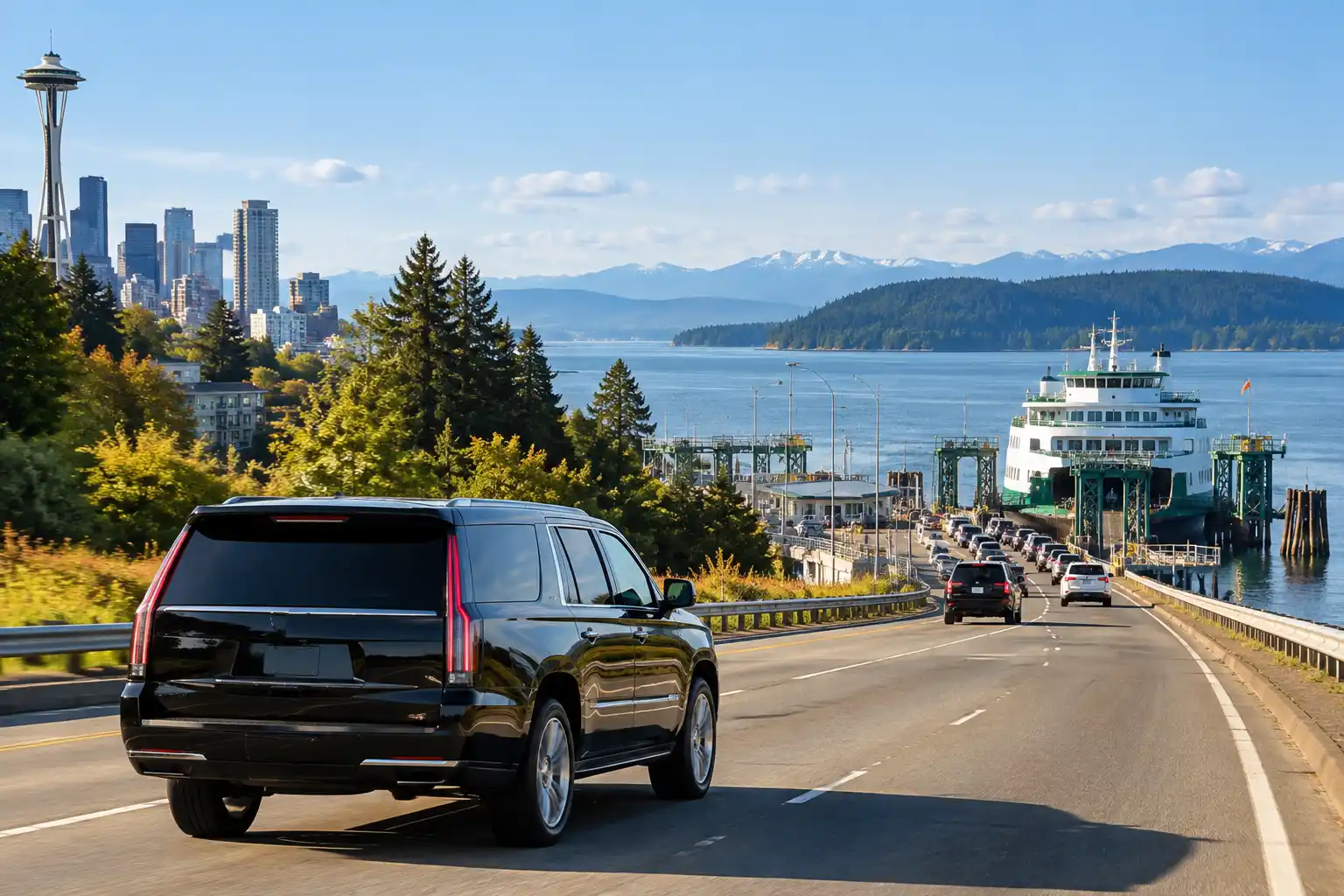
Washington State Ferries leave Colman Dock at Pier 52 for Bainbridge Island, a crossing of roughly half an hour. The ride itself is the attraction: the skyline shrinks behind you while the Olympics rise ahead. Walk on rather than driving, since the small downtown of Winslow is an easy stroll from the terminal, and time the return near sunset.
25. A Mariners Game at T-Mobile Park
T-Mobile Park in SoDo has a retractable roof, so a summer drizzle rarely stops a game. The main concourse wraps the field, letting you watch from different angles while you grab food. Stadium Station on Link light rail is a short walk away, and the season runs from spring into early fall.
Stringing Several Picks Into One Day
The 25 picks fall into natural clusters. Pike Place, the aquarium, the art museum and Olympic Sculpture Park share the downtown waterfront and work on foot. Fremont, Gas Works and the Ballard Locks line up along the Ship Canal, with Discovery Park just beyond. Pioneer Square’s waterfall and the Klondike visitor center sit near the stadiums, while Seattle Center and Kerry Park make an easy afternoon-into-sunset pairing.
The trouble is the gaps between clusters. Transit covers the core well, but Kubota Garden, Seward Park and the Museum of Flight are slow to reach without a car, and parking at popular viewpoints is tight. Our piece on whether you need a car in downtown Seattle explains which areas are easy on foot.
For a day that links four or five picks across town, a chauffeur removes the parking hunt. You can book a driver for a full sightseeing day, or compare hourly car service rates in Seattle for a shorter block. One sample route: the Ballard Locks in the morning, Fremont and Gas Works before lunch, the Museum of Flight in the afternoon and Kerry Park at sunset. Families with bags can ride in a luxury SUV with room for everyone, and arriving visitors can start straight from the airport with a ride from SeaTac to downtown.
Choose two or three clusters, check the city’s parks directory for park details, and then send a sightseeing quote request with the stops you have in mind.
FAQ
Which Seattle attractions cost nothing to visit?
Every city park on this list is free, as are the Frye Art Museum and Olympic Sculpture Park. Two more to add: the Seattle Central Library downtown, whose glass-and-steel building is open to walk through, and Green Lake Park, where a flat loop around the lake draws runners and walkers.
How many days does a first visit to Seattle really need?
Three full days covers the downtown waterfront, Seattle Center and a neighborhood or two such as Ballard or Fremont without rushing. A fourth or fifth day leaves room for a ferry ride, a long park walk or a trip beyond the city. With only one day, choose two clusters that sit close together rather than chasing every famous name.
What is the easiest neighborhood to base a sightseeing trip in?
Downtown near Westlake is the most practical base, since light rail, the Monorail and many bus lines meet there. Belltown and Lower Queen Anne put you closer to Seattle Center, while Pioneer Square suits travelers who like historic streets. Pick based on where you plan to spend most evenings.
Are Seattle attractions worth visiting in the rain?
Yes, because most Seattle rain is light and steady rather than heavy, and locals carry on in a good jacket. Museums, the aquarium and Chihuly’s glasshouse are natural wet-day choices, and the ferry and the locks are just as interesting under gray skies. Summers are usually dry, so save viewpoints and long park walks for those months if you can.