
Seattle’s business geography is shaped by water. The downtown core and South Lake Union sit on one side of Lake Washington, Bellevue and Redmond on the other, and two floating bridges carry most of the traffic between them. Choosing a hotel on the wrong side of the lake can quietly add an hour of driving to every day of a trip.
This guide is written for the visiting professional with a calendar full of meetings. It explains which district to stay in based on where your appointments are, how to get from the airport to a first meeting, where to sit down with clients, which neighborhoods suit a business dinner, and how to unwind in the short window between the last call and bedtime. Hotels and restaurants are described by district rather than by name, since the right pick depends on your client and your budget.
Choosing a Base by Where Your Meetings Are
Start with a map of your appointments, not a list of hotels. If most meetings cluster in one district, stay there and walk. If they are split across the lake, base yourself on the side where the earliest meetings fall.
Downtown and the Waterfront
The downtown core holds the financial and legal offices, the retail district around Westlake and the Seattle Convention Center, whose two buildings, Arch and Summit, anchor most large conferences. Hotels cluster around the convention center, the retail blocks and the Belltown edge to the north. Link light rail stops at Westlake, Symphony and Pioneer Square, so the airport is a single train ride away. Expect hills: the walk from the waterfront up to Third or Fourth Avenue is short but steep.
South Lake Union
Just north of downtown, South Lake Union has grown into a dense district of tech offices, life sciences labs and research institutions around the south end of Lake Union. Hotels here suit travelers whose meetings sit within the district itself, and many offices are a short walk from the lakeshore path. The South Lake Union Streetcar connects to Westlake, and the walk to the downtown core takes about fifteen to twenty minutes.
Bellevue and the Eastside Tech Corridor
Across Lake Washington, downtown Bellevue forms a compact high-rise core of corporate offices, hotels and a large shopping district, and Redmond, a short drive northeast, is home to the big software campus around the Redmond Technology area. Light rail’s 2 Line rides the I-90 floating bridge between downtown Seattle, Bellevue and Redmond, giving Eastside guests a dependable way into the city. If your meetings are mostly on the Eastside, staying there spares you the bridge commute; our page on Bellevue town car service covers rides around the Eastside.
Getting From SEA to Your First Meeting
Seattle-Tacoma International Airport sits south of the city, and by car downtown is usually 25 to 45 minutes away, with Bellevue somewhat farther. Peak hours on I-5 and I-405 can stretch either trip considerably, so leave a buffer of a couple of hours between your scheduled landing and the first appointment.
Link light rail runs from SeaTac/Airport Station to downtown stations on the 1 Line without a transfer, and the ride to Westlake takes roughly 40 minutes. Eastside travelers can change to the 2 Line downtown to continue across the lake; Sound Transit’s trip planner shows the connections. App-based rideshare pickups happen on Level 3 of the garage, so plan on a walk with your bags after baggage claim.
For a first meeting that matters, a car waiting at the curb removes most of the uncertainty. With meet and greet at Seattle airport, a chauffeur tracks your flight and meets you inside the terminal, and the drive becomes time to review notes or take a call. Travelers who want the same standard for the rest of the trip can reserve executive chauffeured rides for every leg.
Where to Hold a Client Meeting
The client’s own office is the default, but visiting professionals often need a neutral spot. Hotel lobby lounges in downtown and Bellevue are quiet in mid-afternoon and comfortable for an hour of conversation. Flexible workspace providers in downtown, South Lake Union and Bellevue rent meeting rooms by the hour, which is the better choice when you need a screen, a whiteboard or privacy for sensitive topics.
Seattle runs on coffee, and a casual meeting at a café is entirely normal here, even with senior clients. Pick somewhere with seating away from the counter and avoid the busiest tourist areas, such as the blocks around Pike Place Market on weekends. For a relaxed one-on-one, a walking meeting along the waterfront is a local habit that clients often appreciate.
When you and the client are on opposite sides of the lake, offer to come to them. It is a small courtesy that saves them a bridge crossing and usually earns goodwill.
Dining Districts for Client Dinners
Seattle’s dinner scene spreads across neighborhoods, each with a different feel:
– Downtown and the retail core: classic steakhouses and hotel dining rooms, close to most business hotels.
– Belltown: chef-driven restaurants and cocktail bars a short ride north of downtown.
– Pioneer Square: historic brick buildings and an older-city atmosphere, though game nights at the nearby stadiums bring crowds.
– Capitol Hill: creative, energetic and louder, better for a younger team than a formal pitch.
– South Lake Union: convenient right after an office day in the district.
– Downtown Bellevue and Old Bellevue: polished options for Eastside clients without crossing the bridge.
Pacific Northwest seafood, from oysters to salmon, is the obvious local choice, and most visitors expect it. Reserve ahead for Thursday and Friday nights, and request a quieter table if business will be discussed. Our post on restaurants for business dinners offers more ideas for an evening with clients.
Unwinding After the Workday
Even a packed trip usually leaves an hour or two in the evening. Seattle makes it easy to use that time well without a long journey.
Short Walks and Viewpoints
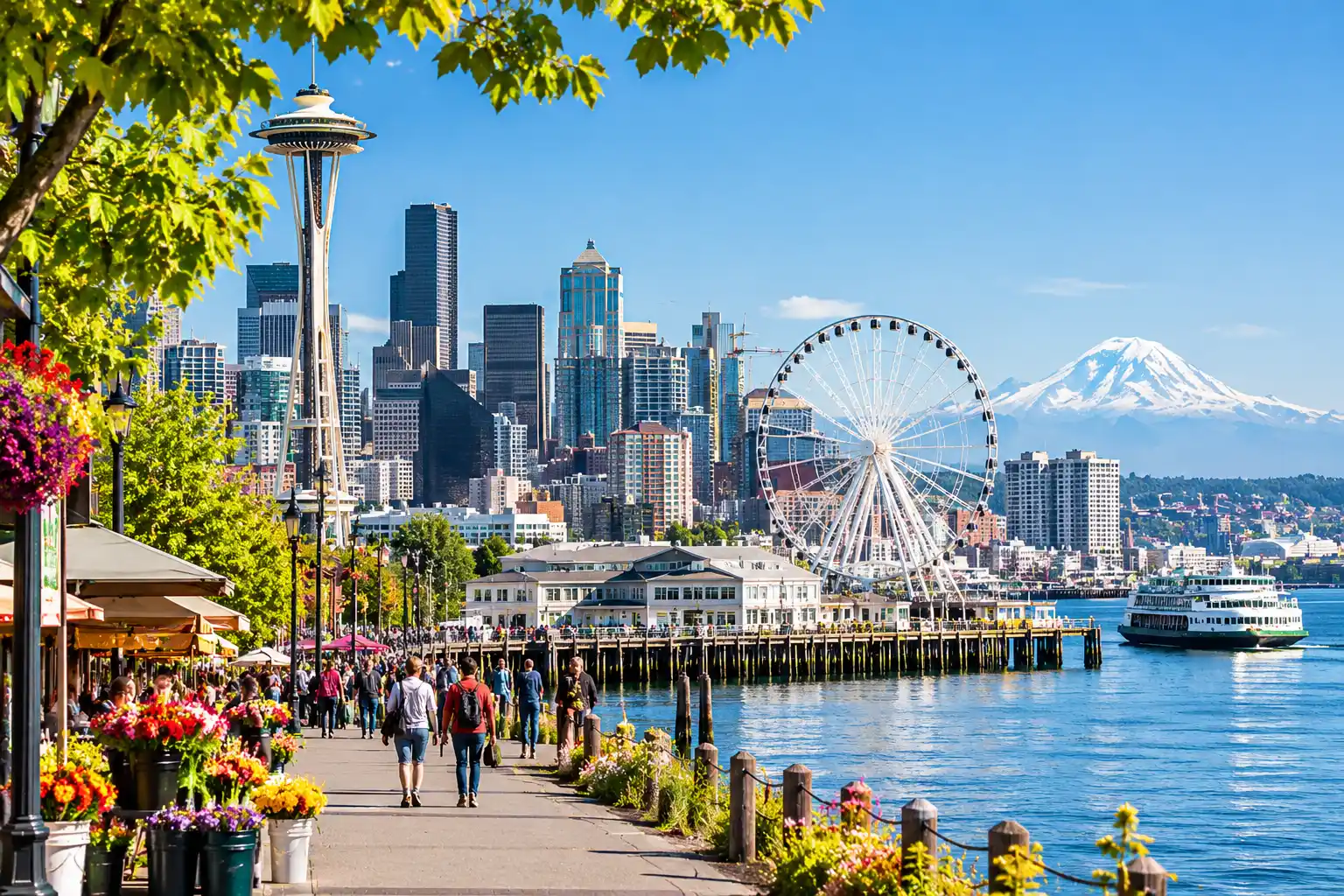
Waterfront Park and Overlook Walk give downtown guests a quick route from Pike Place Market to the water, with views across Elliott Bay toward the Olympic Mountains. Olympic Sculpture Park sits at the north end of the waterfront, and Freeway Park, built over the interstate beside the convention center, offers a green pause between sessions. In South Lake Union, the lakeshore path runs past houseboats and floatplane docks. For a sunset view after dinner, see the viewpoints in our guide to Seattle’s best sights.
An Evening Show or Game
Benaroya Hall, home of the Seattle Symphony, sits steps from Symphony Station downtown, and the historic Paramount Theatre hosts touring productions and concerts. Sports fans can catch the Mariners at T-Mobile Park in summer, the Kraken at Climate Pledge Arena during hockey season, or the Sounders at Lumen Field. Any of them makes a good informal outing with a client who enjoys a game.
Moving Between Offices Without Losing Time
Distances inside Seattle look short on a map, but traffic, hills and bridges stretch them. A drive from downtown to South Lake Union may take ten minutes or thirty, and a trip from downtown to Bellevue varies widely with the time of day. Group meetings by side of the lake whenever you can, and avoid crossing the bridges during the morning and evening rush.
For a day of back-to-back appointments, booking a chauffeur by the hour is often more efficient than calling separate rides. The driver waits nearby during each meeting, and the vehicle’s Wi-Fi and phone charging let you work between stops. See hourly service for business days for how hourly bookings work.
If your company sends people to Seattle often, a corporate travel account keeps bookings and billing in one place. Send your meeting schedule when you reserve, and the itinerary can be planned around it before you land.
FAQ
Is downtown Seattle or Bellevue better for a business trip?
It depends on where your meetings are and how you want to spend evenings. Downtown offers more nightlife, walkable dining and cultural venues, while Bellevue is quieter, more compact and easier to drive around. Travelers with meetings on both sides often split the stay, spending a few nights in each.
How long does it take to get from SEA to South Lake Union?
By car, the trip usually takes 25 to 50 minutes depending on traffic on I-5 and the downtown streets. By transit, ride the 1 Line downtown and finish on the streetcar or on foot, which adds up to roughly an hour door to door. Late-evening arrivals generally see the quickest drives.
Can a chauffeur wait between meetings?
Yes, this is the main advantage of booking by the hour, since the driver stays close by and is ready when you walk out. For long gaps of several hours, two separate transfers may make more sense than keeping a car on standby. Ask for both options when you request a quote and compare.
What should business travelers pack for Seattle weather?
Pack layers and a water-resistant jacket, since temperatures are mild but damp for much of the year and summer evenings cool off quickly. Shoes with good grip help on wet, sloping sidewalks. Many Seattle offices, especially in tech, lean business casual, so ask your host what to expect before packing a full suit.